



Collina comments on the crisis surrounding the Egypt-Argentina match
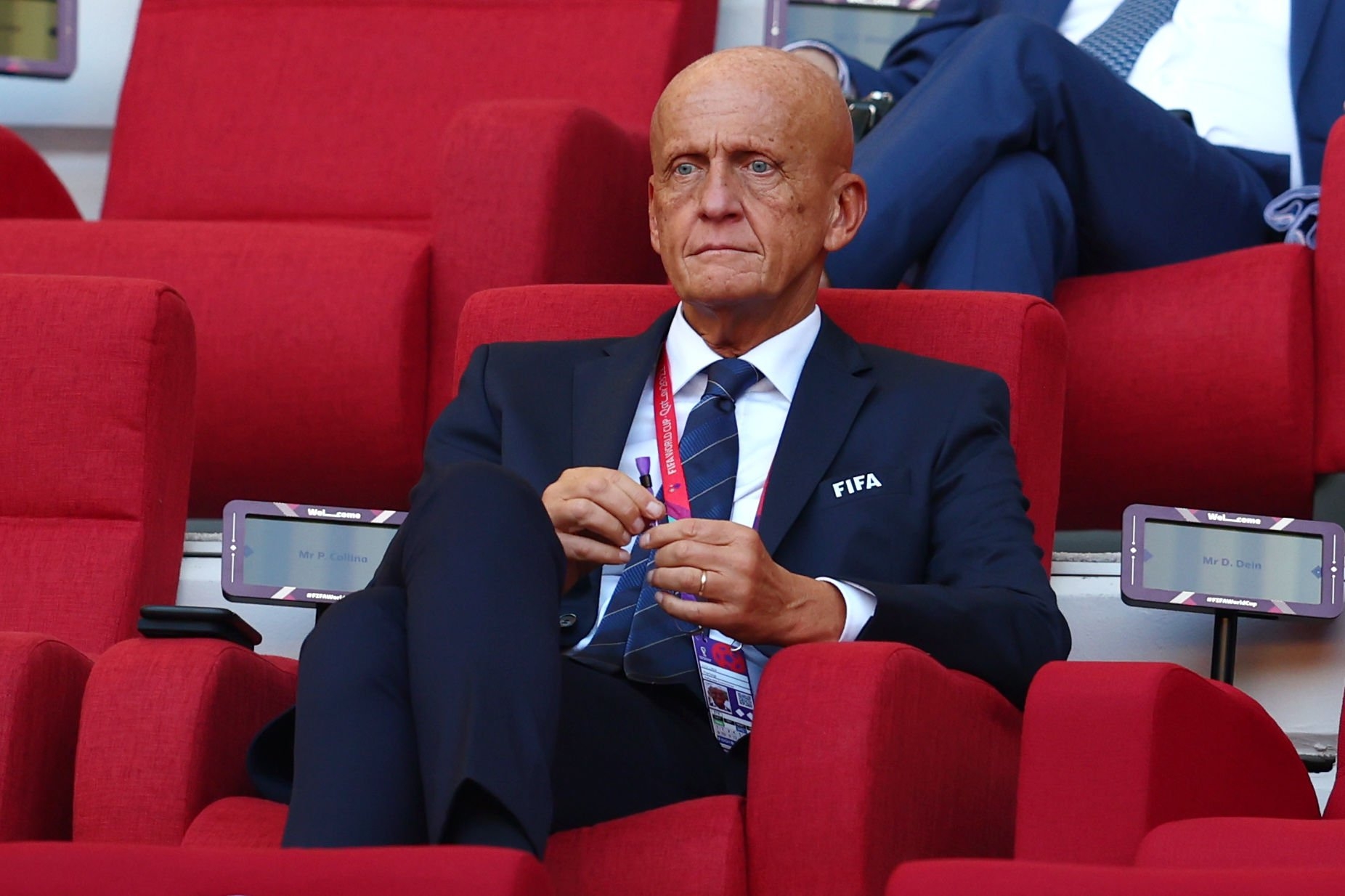
Pierluigi Collina, the Italian chairman of FIFA 's Referees Committee , has settled the controversy surrounding the refereeing decisions in the Argentina-Egypt match in the Round of 16 of the 2026 World Cup. He confirmed that French referee François Letixsea did not make any significant errors during the match, and that the incidents that drew protests from both the Egyptian and Argentinian teams were handled according to the Laws of the Game . Several matches in the tournament have been widely criticized for refereeing decisions, with the Argentina-Egypt match being one of the most prominent examples. Argentina had objected before the match to the appointment of the French referee, and Egypt later voiced their criticism after the final whistle due to a disallowed goal and a penalty not being awarded . In statements published on FIFA 's official website , Collina affirmed that the overall standard of refereeing in the tournament was satisfactory. He noted that the congested schedule and the large number of matches played in a short period could lead to some controversial incidents, but that the referees continue to work towards achieving the highest level of readiness . Collina said: "Debate about refereeing decisions will always be part of football , that's normal, but accusations not based on facts have no place in the game. The integrity of World Cup referees cannot be questioned, nor can it be claimed that their decisions are subject to any external influence." He added: "No one can influence the work of the FIFA Referees Committee , not even the FIFA president himself. Gianni Infantino has always shown his full support for the refereeing team and given us the confidence to work independently. The referees make their decisions honestly and strive to perform at their best, just like the players and coaches." Regarding the Argentina-Egypt match, Collina confirmed that the decision to disallow the Egyptian goal was correct, explaining that VAR always reviews the build-up phase of any attack before a goal is scored, and if there is a significant foul, a review of the decision is requested . He explained: "In the Argentina-Egypt match, an incident occurred when Marwan Attia, an Egyptian player, stepped on the foot of Lisandro Martinez, an Argentinian defender. We considered this a clear foul during the build-up to the attack. For us, a foul remains a foul, and if the referee didn't see it during the match, VAR can intervene." The head of the referees committee pointed out that the application of VAR is not related to where the foul occurred or the time elapsed before a goal was scored, emphasizing that any significant foul during an attack can be reviewed according to the established rules . Collina also addressed the incident where the Egyptian team appealed for a penalty kick, confirming that the referee and VAR deemed the contact between Egypt's Mohamed Salah and Argentina's Julian Alvarez to be normal contact that did not warrant a foul . Collina concluded his remarks by affirming that some refereeing decisions will always be subject to a degree of discretion, which is normal in football, but he stressed his satisfaction with the way the refereeing standards and VAR were applied during the tournament .